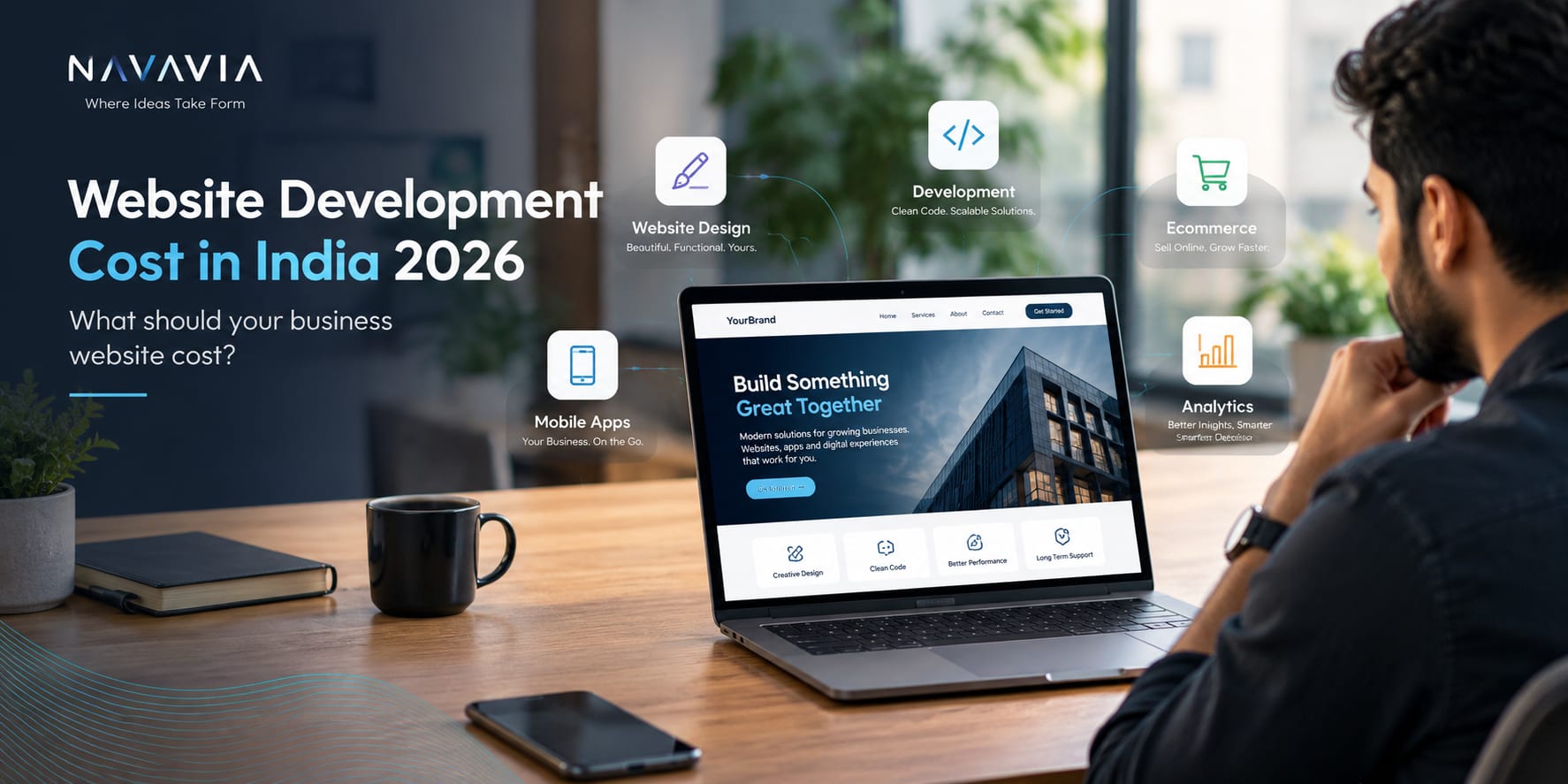
How Much Does It Cost to Build a Website for a Small Business in India in 2026?
A professional website is no longer optional for most businesses. Whether you run a local business, startup, professional service, or growing company, your website can become an important source of customers, enquiries, and sales.
But one question comes up before starting almost every project:
How much does it cost to build a website in India?
There is no single price because website development costs depend on the type of website, design, features, technology, integrations, and level of customization required.
Website Development Cost in India
The approximate cost of a website depends on what your business actually needs.
Basic business website: Suitable for presenting your company, services, contact details, and basic information.
Professional business website: Includes custom design, multiple service pages, lead-generation features, SEO-friendly structure, and improved user experience.
Ecommerce website: Includes products, categories, cart, checkout, payments, orders, and inventory-related functionality.
Custom web application: Designed around a specific business process and may include user accounts, dashboards, databases, APIs, and automation.
Website with mobile application: Suitable for businesses building a complete digital platform.
The more functionality and customization you require, the greater the development effort.
What Affects Website Development Cost?
1. Design and User Experience
A template-based website can be quicker to build, while a custom website requires additional UI/UX planning and design.
A custom design can help your business create a unique identity and provide a better experience for your customers.
2. Number of Pages
A five-page company website requires much less work than a large website with dozens of service, product, location, or landing pages.
3. Features and Functionality
Features can significantly change the cost of development.
Depending on your business, you may need:
Customer login and registration
Admin dashboard
Online payments
Booking system
Product management
Search and filters
Customer dashboards
Notifications
WhatsApp integration
CRM integration
Third-party APIs
Reports and analytics
4. Ecommerce Requirements
An ecommerce website requires more than simply displaying products.
A complete online store may need product management, categories, search, filters, shopping cart, checkout, payment gateway integration, order management, customer accounts, shipping and notifications.
5. Custom Development
A business with a unique idea may require a custom-built website or web application rather than a standard template.
For example, a business platform could allow users to register, submit information, access a personal dashboard, make payments, generate reports, and manage their account.
This requires considerably more development than a standard informational website.
Template Website vs Custom Website
A template website can be a good choice when your requirements are simple and you want to launch quickly.
A custom website is more suitable when you need:
Unique functionality
Custom user experience
Business-specific workflows
Third-party integrations
Better scalability
A platform that can grow with your business
The right choice depends on your business goals, not simply the lowest initial price.
Don't Forget About SEO
Building a website does not automatically bring visitors from Google.
Your website should have a strong technical foundation for search engines, including:
SEO-friendly URLs
Proper page titles
Meta descriptions
Heading structure
Mobile responsiveness
Fast-loading pages
Optimized images
Internal linking
XML sitemap
Structured data where appropriate
More importantly, the website needs useful content that answers what your potential customers are searching for.
Should You Build a Website or an App?
Not every business needs a mobile application from day one.
A website may be the better starting point if customers mainly discover your business through Google or don't need to use your service frequently.
A mobile application can make more sense when customers regularly interact with your service and require features such as personalized accounts, push notifications, or device-specific functionality.
For some businesses, the right solution may eventually be a website + web application + mobile app.
How to Choose a Website Development Company
Before selecting a developer or agency, don't only compare the price.
Ask:
Will the website be mobile responsive?
Is the design custom or template-based?
Will I own the website and source code?
Is SEO-friendly development included?
Can the website be expanded later?
Are integrations included?
Is an admin panel required?
What support is provided after launch?
The cheapest website is not always the most cost-effective solution.
A website should ultimately help your business attract customers, generate enquiries, sell products, or improve operations.
Build the Right Digital Product for Your Business
At NAVAVIA, we believe website development should start with understanding the business problem—not simply choosing a template and adding pages.
From business websites and ecommerce platforms to custom web applications and mobile apps, the right solution depends on what you want your digital product to achieve.
Have an idea for a website or app? Let's turn your idea into a digital product.